
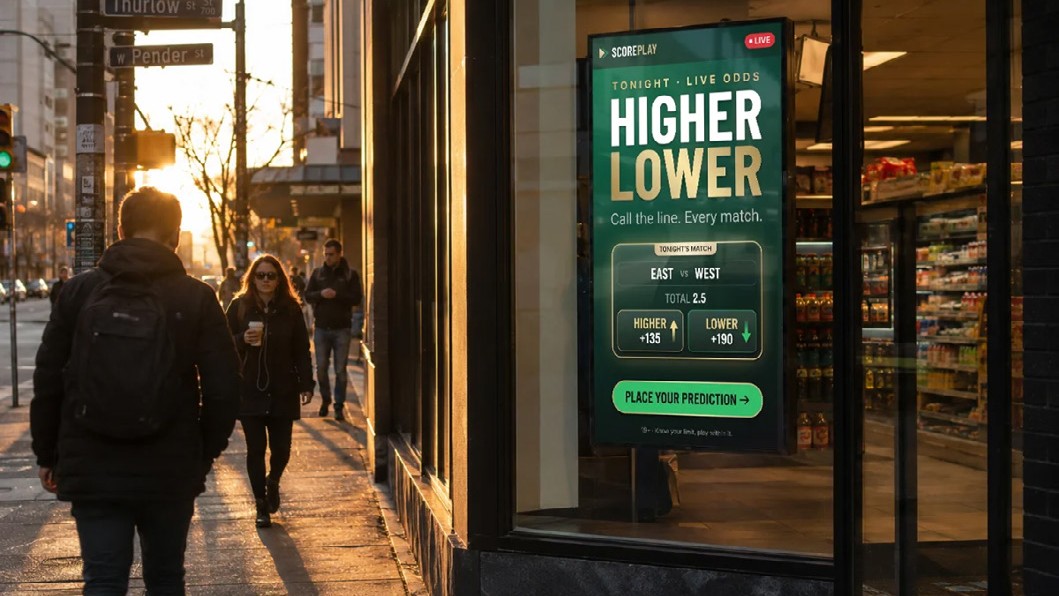
Convenience store alcohol sales in Ontario have reached $435 million, with convenience and gas locations now accounting for 40% of alcohol sales in the province, according to NIQ data reported by Convenience Store News Canada.1 Most alcohol media plans still treat the LCBO and The Beer Store as the point of purchase. The buying moved. The plan should follow.
The alcohol shelf moved to the corner store
Ontario licensed 4,187 convenience stores to sell beer, wine, cider and ready-to-drink beverages when the channel opened in September 2024.2 Less than 2 years later, alcohol is a $435 million category in convenience and gas retail, and the channel holds 40% of alcohol sales in the province.1 Beer still leads the basket. Seltzers and ready-to-drink products are gaining ground fast.
This is a structural shift in where Ontarians buy alcohol, not a promotional spike. The store count keeps growing, the category keeps expanding, and the shopping habits formed over the past 2 summers are now routine.
What is driving alcohol sales growth at convenience stores
Ready-to-drink products are the engine. RTDs are projected to grow at a 17.2% compound annual growth rate from 2025 to 2030, according to Triton Market Research.1 Suppliers interviewed by Convenience Store News Canada describe a category that behaves differently from beer and wine. RTD purchases are impulse-led. Cold availability drives conversion. Occasions such as long weekends, patios and game days set the buying rhythm.1
That behaviour profile matters more to a planner than the topline number. In an impulse category, the last message before the store wins. A shopper who decides at the fridge door was influenced somewhere between home and the forecourt. Media that lives in that gap earns the sale.
Why brands cannot simply buy the store
Alcohol and Gaming Commission of Ontario rules restrict how advertising works inside licensed convenience stores. Licensees can promote the brands and prices they carry, but they cannot accept money or other benefits from manufacturers in exchange for advertising specific brands.3 The in-store trade playbook that works for snacks and soft drinks does not transfer cleanly to alcohol.
That leaves the surrounding neighbourhood as the most direct compliant path to the purchase moment. Out-of-home placements near convenience and gas retail reach the buyer minutes before the fridge door opens, without touching licensee inducement rules.
How DOOH puts alcohol brands in front of the buyer
Adapt Media, a Canadian out-of-home network, runs static and digital placements in the neighbourhoods surrounding convenience and gas retail from coast to coast, delivering 1 billion monthly impressions across 15,000+ placements in 2,000+ local markets. 78% of Canadians pay attention to out-of-home advertising, according to COMMB.4
The channel also extends. Campaigns that pair DOOH with mobile have delivered 303% reach extension and a 46% engagement lift, according to Broadsign.5 For an alcohol brand, neighbourhood screens build presence around the retail cluster while mobile retargeting carries the message to the exposed device pool through the rest of the purchase window. Audience intelligence reporting through Datalytica covers visitation and dwell patterns before and after exposure.
The neighbourhoods where the category grows next
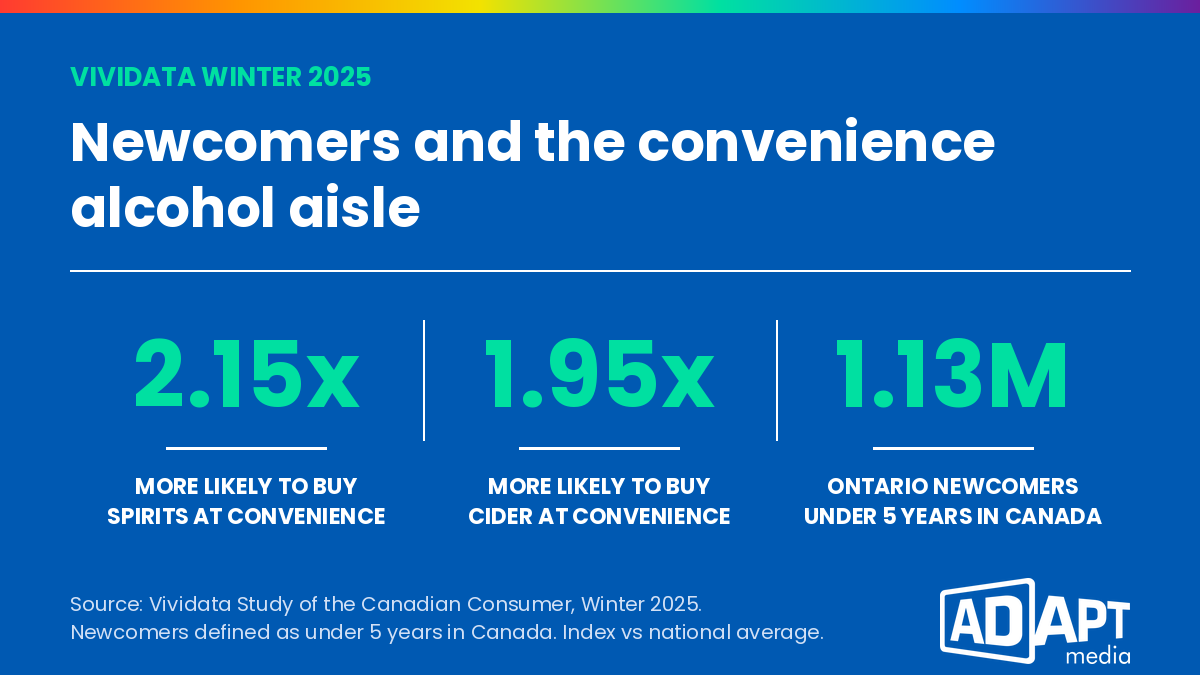
Multicultural neighbourhoods deserve their own line in the plan. Racialized Canadians represent 26.6% of the population, according to Statistics Canada.6 Newcomers are 2.15x more likely than the average Canadian to buy liquor or spirits at a convenience store, and 1.95x more likely to buy cider there, according to Vividata’s Winter 2025 Study of the Canadian Consumer.7 With 1,133,000 newcomers in Ontario who arrived within the past 5 years, corner stores and gas retail anchor daily routines in these communities, and that makes them high-frequency environments for a category built on routine trips and quick decisions.7
Adapt Media’s multicultural network covers 30+ neighbourhoods with placements built into the community, not bolted on. For alcohol brands with growth targets in the GTA, Peel and other high-density multicultural markets, this is where incremental volume lives.
Put the media where the sale happens
Ontario’s alcohol buyer changed channels in under 2 years. The plans that win the next budget cycle will be the ones that moved with them. Talk to the Adapt Media team about reaching alcohol buyers in the neighbourhoods where 40% of the province’s alcohol now sells.
National coverage. Neighborhood relevance.
References
- Convenience Store News Canada. “Sip into summer with these ready-to-drink beverage alcohol tips and trends.” ccentral.ca. Accessed July 2026.
- Government of Ontario. “Convenience stores across Ontario can now sell beer, wine, cider and ready-to-drink beverages.” news.ontario.ca. Accessed July 2026.
- Alcohol and Gaming Commission of Ontario. “Guide for Grocery Store and Convenience Store Licensees: Advertising and Inducements.” agco.ca. Accessed July 2026.
- COMMB. 2022 Impact Growth and Change Report. commb.ca. Accessed July 2026.
- Broadsign. DOOH and mobile campaign performance data. broadsign.com. Accessed July 2026.
- Statistics Canada. Racialized population share. statcan.gc.ca. Accessed July 2026.
- Vividata. Study of the Canadian Consumer, Winter 2025. Newcomer alcohol purchase behaviour. vividata.ca. Accessed July 2026.