
Organized retail crime is a $5 billion industry in Canada annually, and it affects more than 87% of independent retailers.1 The screens behind the counter at every convenience store and gas station in the Adapt Media network are not just media inventory. They are the closest thing to a direct line between law enforcement and the neighbourhoods where retail crime actually happens. Adapt Media has spent close to a decade proving that line works.
The retail crime problem most networks ignore
Most digital out-of-home networks measure their value in impressions, viewability, and reach to broad audience cohorts. Those metrics matter. They are not the whole picture. For retailers operating in Canada right now, the cost of organized retail crime is showing up in two places that conventional media planning does not account for. Prices at the till are going up because shrink is going up. Front-line workers are at higher risk because the criminals running these operations are more organized and more aggressive than five years ago.1
The question for media planners working with retail and CPG clients is whether their network does anything about the conditions their inventory is sitting inside. Most do not. The screens in those locations are filled with the same brand creative that runs everywhere else. The community context the network sits inside is invisible to the strategy.
What a real media partnership in crime prevention looks like
Toronto Crime Stoppers does not receive government funding.2 The program runs on a partnership between police, media, and community. That model only works if the media side actually shows up. Showing up does not mean a quarterly logo placement or a press release. It means carrying the See it. Say it. Stop it. message consistently across screens that sit in the environments where the crime is happening. It means showing up for the Organized Retail Crime Awareness campaign, the Hate Crime campaign, the Gun Violence campaign, the human trafficking campaigns, the campaigns that no one with a media budget wants to pay for but the public needs to see.
For Adapt Media this has meant running Toronto Crime Stoppers creative across its gas station and convenience store network in Ontario for close to 10 years. That cadence is what makes the partnership credible to the police side and effective for the public.
Where the message has to land
This is the part that most DOOH planners miss. National DOOH coverage at the neighbourhood level is what makes a campaign like See it. Say it. Stop it. work. The message has to land in the specific stores where crime happens, not just on a billboard in the city.
Adapt Media’s Circle K network, Independent Convenience Store network, and INS network put the message in front of the people who are inside those stores every day. Not in front of commuters at 80 kilometres an hour. Not behind a paywall on a streaming service. Inside the venue. Where the staff work. Where the customers shop. Where the tips actually get phoned in afterwards.
The award that recognized the work
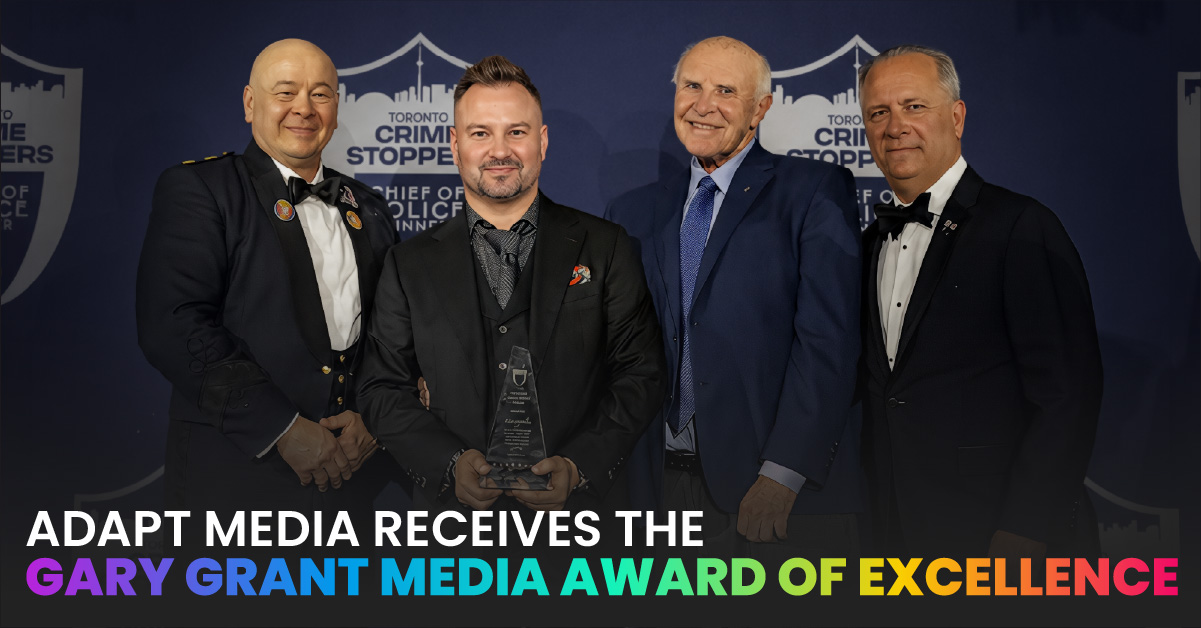
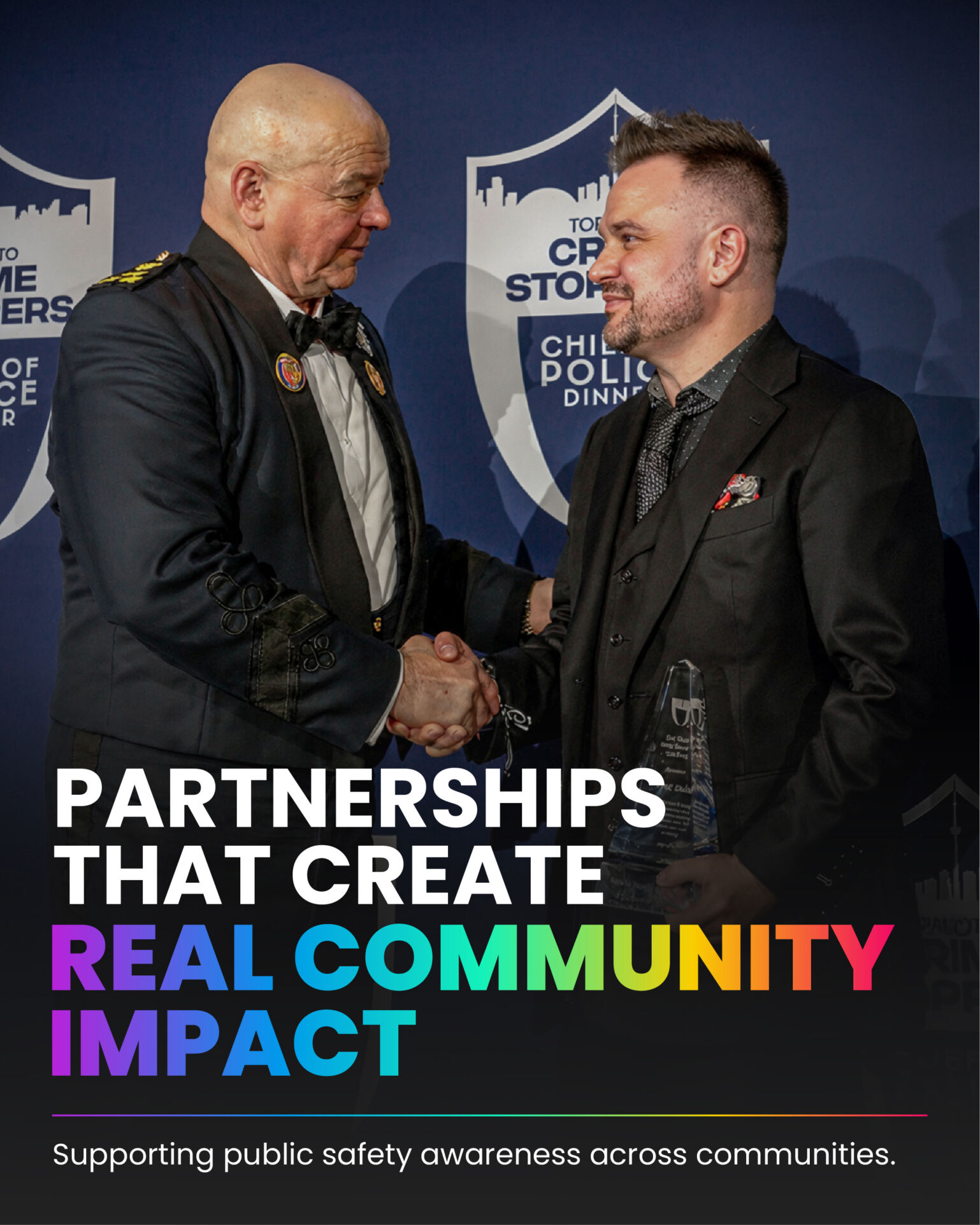
On May 14, 2026, at the Toronto Crime Stoppers Chief of Police Dinner, Adapt Media was named the recipient of the 2026 Gary Grant Media Award of Excellence. The award is named for Gary Grant, retired Toronto Police Staff Superintendent and the founder of Toronto Crime Stoppers. It is sponsored this year by Lionguard Security and presented by Chief Myron Demkiw.
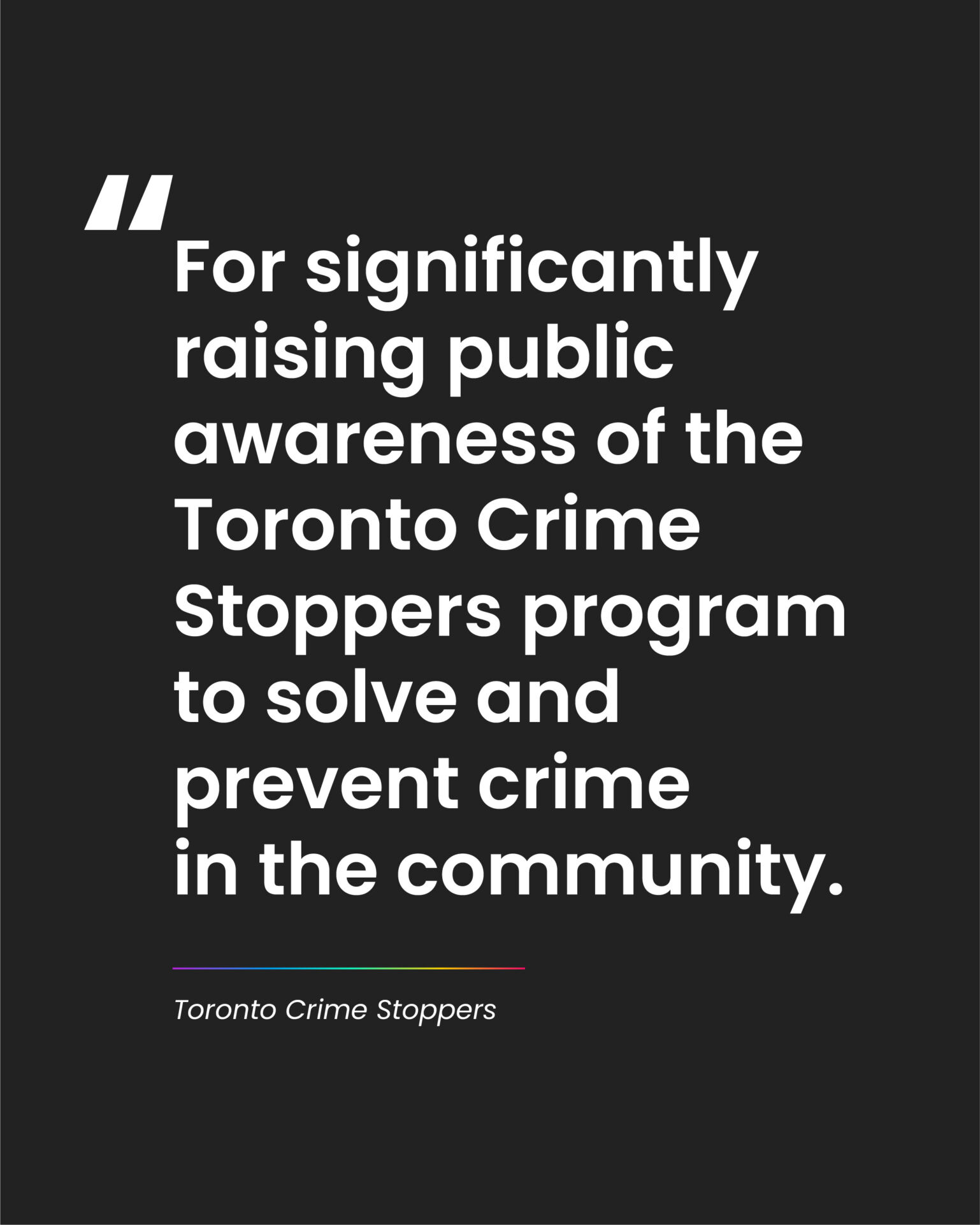
The engraved citation on the crystal reads: For significantly raising public awareness of the Toronto Crime Stoppers program to solve and prevent crime in the community. The official citation letter from Toronto Crime Stoppers explains the criteria. The award recognizes a media outlet that has shown exceptional commitment to community outreach, partnership, and reducing crime while enhancing public safety. Sean Sportun, Board Chair of Toronto Crime Stoppers, has been the architect of this partnership from the Crime Stoppers side and is one of the most recognized voices in retail and community crime prevention in Canada.

What this means for retailers and brand marketers
For retailers, the takeaway is that the network running media inside your stores is a lever you can pull on something other than ad sales. The same screens that show CPG creative can carry community safety messaging that protects the staff who work for you and the customers who shop with you. That dual function is something most networks cannot deliver because they do not have the relationships, the cadence, or the willingness to commit screen time to a non-paying community partner.
For brand marketers, especially those running campaigns in c-store, gas, or community-adjacent retail environments, the takeaway is that brand safety in DOOH is not just about what your ad sits next to. It is about what the network does for the community its inventory lives in. Adapt Media is a network that does the work. The crystal on the shelf is the receipt.
References
- Toronto Police Service. Toronto Crime Stoppers stories: Organized Retail Crime. https://www.tps.ca/media-centre/stories/?tag=toronto-crime-stoppers. Accessed May 2026.
- Toronto Crime Stoppers. About Toronto Crime Stoppers. https://www.222tips.com/. Accessed May 2026.